



NGO organizations that carry out various relief activities for poor regions and underprivileged people around the world. Among these, there is a place that considers ‘education’ as its biggest mission and makes efforts to ensure that everyone is equal in education.
The World Educational Cultural Aid (WECA), which started as the ‘Asian Education Research Institute’ in 2006, is carrying out various educational and cultural support projects for the underprivileged in education at home and abroad under the slogan ‘Education is life.’
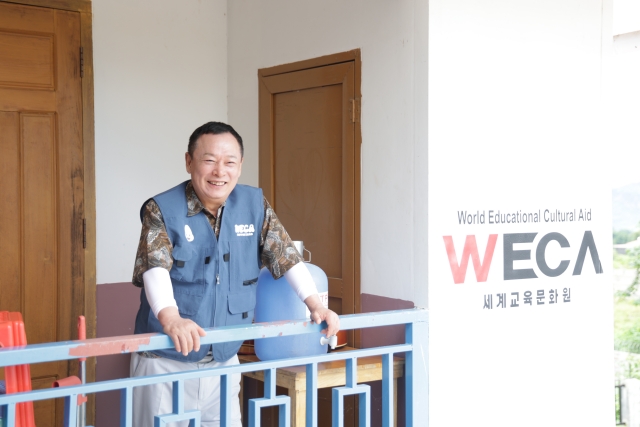
Bang Jeong-hwan, Chairman of the World Educational Cultural Aid, said, “When I meet children in the field, I hear ‘I don’t know if I can do it’ more often than ‘I want to study.’” He added, “As I learned that this is not a limitation of the children themselves, but rather a result of the given environment, I felt the importance of education even more keenly.” This served as an opportunity for the World Educational Cultural Aid to consider ‘education’ as the most fundamental value for children’s independence.
The World Institute for Education and Culture says that education is the starting point of change. They say that education is the most effective way to overcome poverty, and therefore, educational access opportunities should be provided so that children can be equal in education.
Chosun Edu looked into the meaning of education as spoken by Bang Jeong-hwan, chairman of the World Educational Cultural Aid, and his efforts to reduce educational disparity with the underprivileged.
─ What kind of place is the World Educational Cultural Aid, and what is the meaning of the slogan ‘Education is life’?
The World Educational Cultural Aid is a non-profit organization that first reaches out to places where educational and cultural opportunities are lacking and supports the growth of children and local communities. Since its establishment in 2006, it has supported education, study rooms, and cultural activities for underprivileged children and youth in Korea. In addition, we are helping children continue to have stable learning opportunities by establishing schools and building educational infrastructure in over 20 countries. We want to create sustainable change so that education can become a foundation for self-reliance and hope.
The slogan ‘Education is life’ means that education is not just learning, but a fundamental force that supports a person’s life and opens the future.
Education is the starting point for a child to gain the opportunity to become independent and break the long chain of poverty. The World Educational Cultural Aid believes that education is the foundation for survival and the surest path to hope. Based on this belief, the World Educational Cultural Aid seeks to first reach out to places where education cannot reach.
─ What is the most iconic program of the World Educational Cultural Aid?
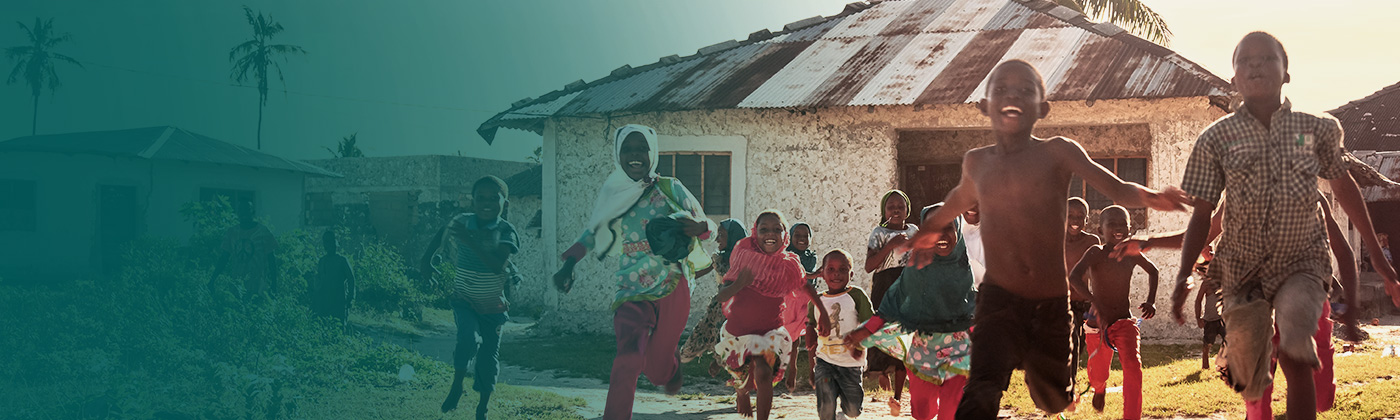
The World Educational Cultural Aid's representative project is WE-SCHOOL, a school establishment project carried out in overseas educationally underprivileged areas. In 2018, the first we school was established in Kasanda Village, Uganda, Africa, and schools were gifted to about 600 children, allowing children in poverty to receive quality education in a good environment.
One of the World Educational Cultural Aid's representative projects is to create a dormitory for female teenagers who cannot receive education because their homes are too far away or the commute to and from school is dangerous.
─ You are also actively engaged in domestic support projects. How are activities for the underprivileged in education in Korea operated?
We provide educational and cultural support programs and study room support projects for local children's centers, group homes, daycare centers, and multicultural families, helping to ensure that learning opportunities do not run out. We are also continuing to support educational and medical scholarships so that patients in need of treatment can return to education. Through humanitarian support projects such as briquettes, kimchi, and emergency relief, we provide a foundation for children to receive a stable education even in difficult environments.
We build schools in areas that lack educational infrastructure and run various programs. Rather than simply building buildings, we support children's growth by running cultural education programs such as soccer, taekwondo, and music classes. This is a multifaceted education support project that goes beyond one child and helps a village become self-reliant. In addition, we are carrying out educational support projects for the underprivileged at home and abroad in a variety of ways, such as a Taekwondo voucher project for domestic disabled people and alternative school students, 1:1 scholarship partnerships for overseas children, and support for hygiene education and hygiene products in poor countries.
The gap in domestic education, which I personally felt while visiting the field, is still larger than I thought. There are notable differences in the learning opportunities and educational resources available to children depending on the family's economic conditions or care environment. In particular, children from local children's centers, group homes, and multicultural families often lack even a basic learning environment. This gap is not simply a matter of grades; it can limit the very possibility of children pursuing their dreams, so more careful support is needed.
─ How do you think blind spots and deviations in education should be fundamentally resolved?
These problems are difficult to solve through the efforts of one organization alone. A structure in which the state, local communities, and private organizations cooperate together is more important than anything else.
In particular, because each child's situation is different, customized educational support tailored to the region and target is needed rather than uniform support. A thorough approach must be taken, such as providing a learning environment for children who lack care and providing medical support for children with medical difficulties to return to education. The World Educational Cultural Aid also plans to continue its role of providing necessary education close to the field through this public-private cooperation.
─ Among the many NGO activities, why does the World Educational Cultural Aid especially focus on education?
The reason the World Educational Cultural Aid focuses on education is because we believe that education is the most fundamental and effective way to end the cycle of poverty. Even if emergency relief and livelihood support are continuously provided, poverty in the field cannot be easily solved. While visiting the site, I realized that it is difficult to change the lives of children with simple support.
In order for children to become fundamentally independent, the foundation of ‘education’ must be provided. Education is the starting point for a child to develop the power to become self-reliant and for a community to create a sustainable future. Our slogan, ‘Education is life,’ was also born in this area.
─ Then, are there any actual cases of people continuing their studies through support?
There are young people preparing for independence who have continued their studies and entered college through scholarship support. I feel very rewarded when I see people not missing out on learning opportunities and realizing their dreams to the fullest even in difficult environments.
There is also a child who continued his studies overseas and entered pharmacy school through a scholarship. This is an example that shows that educational support can change a child's life and give them the power to create their own future. As such, we believe that our support is not just help, but a process that increases children's potential to become independent.
─ Looking back in 2025, what achievements has the World Educational Cultural Aid achieved?
2025 was a year in which the World Educational Cultural Aid further expanded field-oriented educational support for the underprivileged at home and abroad.
In Korea, the ‘WECA Cup World Happiness Sharing Taekwon’ competition was also held, providing opportunities for children to develop confidence and grow through sports and cultural education.
Overseas, we completed the ‘WECA High School’ in the Dila region of Ethiopia, establishing a foundation for sustainable learning in a field lacking educational infrastructure. In addition, we were selected for the Korea Water Resources Corporation's overseas social contribution contest and promoted a regional development project to build a residential environment so that children in Cambodia can live in a safer environment.
─ What direction of activities does the World Educational Cultural Aid want to focus on this year and what are your resolutions for the new year?
This year, the World Educational Cultural Aid plans to further expand support for the underprivileged in education at home and abroad.
In Korea, we plan to strengthen our educational and cultural support projects, focusing on group homes and alternative schools, so that children can continue their studies in a stable environment. Overseas, we plan to continue supporting children with scholarships based on With Home, that is, overseas WECA group homes, and expand growth paths for children to become independent. We also want to expand various cultural programs such as soccer, taekwondo, and music classes, as well as language school and language education support projects, to help learning go beyond the classroom and lead to changes in life.
I believe that education is not just learning, but the most reliable starting point for a child to dream again and choose their own direction in life. The World Educational Cultural Aid will continue to deliver the hope of independence to children through educational support, and will never stop working to change a person's life and the tomorrow of a region. We ask for your continued interest and participation. thank you
Participation and Communication
Media Coverage
Bang Jeong-hwan, Chairman of the World Educational Cultural Aid, “Educ…
2026. 03. 11 16:15

























World Educational Cultural Aid
CEO : Bang Junghwan
Company Registration Number : 101-82-14477
TEL : 1522-3959
FAX : 02-2686-3959
E-MAIL : master@weca.or.kr
Headquarters : #1604-145, Gasan digital 1-ro, Geumcheon-gu, Seoul, Korea (Ace Highend Tower 3)
Consultation Time : Weekdays 09:00~18:00
Branch : #1217-115, Dongdeok-ro, Jung-gu, Daegu, Korea (Jinseok Tower)


